



Every morning for several years, I found myself driving out of my garage in Los Gatos, California in my EV, a Honda Prologue, and I headed for highway 17 with a very specific cup of coffee in my hand as I headed into my office at a global tech company based here in Silicon Valley.
I’m not exactly a coffee snob, but I have had the privilege of tasting specialty grade, single origin, dark roasted brown gold on my refined taste buds from the Gayo Highlands of Sumatra. Good Lord, it is truly divine.
I know these highlands. I spent years in Indonesia early in my career, and I know that this coffee, the most prized cup I have ever tasted, exists because of one small animal making one deliberate choice at a time.
The Asian palm civet.

Every night, in the forests of Sumatra, the civet wanders through the coffee trees and selects only the ripest, most perfect cherries. It does not grab everything in sight. It picks thoughtfully, with a discernment that produces something the rest of the world races to pour into their morning cup.
After passing through the civet’s digestive system, those beans are collected, cleaned, and roasted into kopi luwak: some of the smoothest, most complex coffee on the planet.
Yes. You read that correctly.
The slow, careful, curated choices of one small animal in the dark produce the world’s most prized coffee.
Every time I think about how we are deploying AI here in Silicon Valley right now, I keep coming back to the same question:
What would it look like if we led more like the civet?
The Rat Race Has a Neurological Cost
I was at HumanX conference in San Francisco this spring. I found myself bizarrely standing next to a robot dog. It is a remarkable piece of technology. It moves with a precision I will never have. It does not get tired. It does not need kopi luwak to start its morning.
It has never once been curious about anything. (It also isn’t cozy or fluffy, and I honestly don’t get it, but maybe that’s just me, a true dog lover.)

That distinction matters more than most organizations currently recognize. Because while we have been racing to deploy, the science has been catching up to what our people have been experiencing in their bodies.
In March 2026, Harvard Business Review and the BCG Henderson Institute published one of the largest empirical studies of human factors in AI adoption ever conducted. 1,488 workers. Wwhat they found had a name.
AI Brain Fry.
Mental fatigue from excessive use or oversight of AI tools beyond one’s cognitive capacity. Symptoms include mental fog, a buzzing sensation, slower decisions, difficulty focusing, and headaches at the end of the day.
This was not because people stopped caring but because their brains hit their biological ceiling.
The data:
14% more mental effort just to monitor AI outputs
19% greater information overload
33% higher rates of poor decision-making
39% more likely to quit
Your AI investment may be generating an attrition risk that does not appear on your adoption dashboard.
The Speed Tax
I have a name for what is accumulating in organizations right now: The Speed Tax.
We see it when we measure the cumulative cost an organization pays, in trust, adoption, performance, and retention, when it deploys AI at speed without the culture architecture to support it.
It accumulates the way financial debt does: quietly, in the background, until one day the balance is due and the cost is much higher than anyone budgeted for.
I saw this firsthand. I was brought in to lead a full-scale leadership and culture transformation at a Silicon Valley Fortune 100 AI hardware company. I traveled to sites across APAC, EMEA, and the Americas. What I found on the ground was something no dashboard was measuring.
Behavioral change was happening in the programs. It was not sticking between them. Back on the job, under the pressure and pace of the daily workload, people reverted. No tool anyone was selling was solving for this.
So I did what behavioral science actually tells you to do. I slowed down. I listened, not to a consultant report, and not to headquarters assumptions. I sat with the people doing the work, across languages, across time zones, and I heard them.
Then I built from what I heard.
I built Abeja, an AI coaching agent inside Microsoft Copilot, designed from the ground up around the behavioral gaps employees themselves named. I tested it head to head against a leading vendor’s agent before it ever reached the full population of 2,000 employees.
The result: 15% ROI improvement in core competency learning.
The agent designed from listening outperformed the vendor agent by 15%.
The lesson was not about the technology. It was about what happens when you pick only the best cherries before you start building.
The Four Pillars of Culture Architecture
Here is the framework I use with organizations navigating AI transformation. I call it Culture Architecture. There are just four pillars, none of them complicated. All of them are grounded in evidence.
1. Voice Before Velocity
Listen at scale before you build at scale. This is not just surveys. This is real conversations, across languages, roles, and time zones. Get in there with the people and have conversations. Co-creation research shows adoption rates 40-60% higher when people help shape what they adopt. The civet selects before it eats. You listen before you build.
2. Design for Transfer
Close the gap between where change is designed and where work happens. Eighty to ninety percent of training investment is lost without active transfer support (Baldwin and Ford, decades of research). If your only metric is program completion, your investment is leaking out, bean by bean, every day.
3. Build Trust Architecture
Every AI rollout needs an explicit answer to the question every employee is asking silently: is this tool here to help me do better work, or is it here to replace me and watch me in the meantime? If you do not answer that proactively, their nervous system answers it for them. The nervous system answer generates Brain Fry data.
4. Measure What Matters
Add mental load to your dashboard. Add psychological safety scores. Add behavioral change indicators. If your only AI metrics are efficiency and output volume, you are flying blind on the human side of the equation. The HBR Brain Fry data tells us exactly where that leads.
The Waymo Problem
Have you ever been in a Waymo?
I have. Here in San Francisco. In fact, I took one after one of the events at that same Human X conference we had at City Hall. It is remarkable technology. I watched it navigate the city with genuine awe that night.
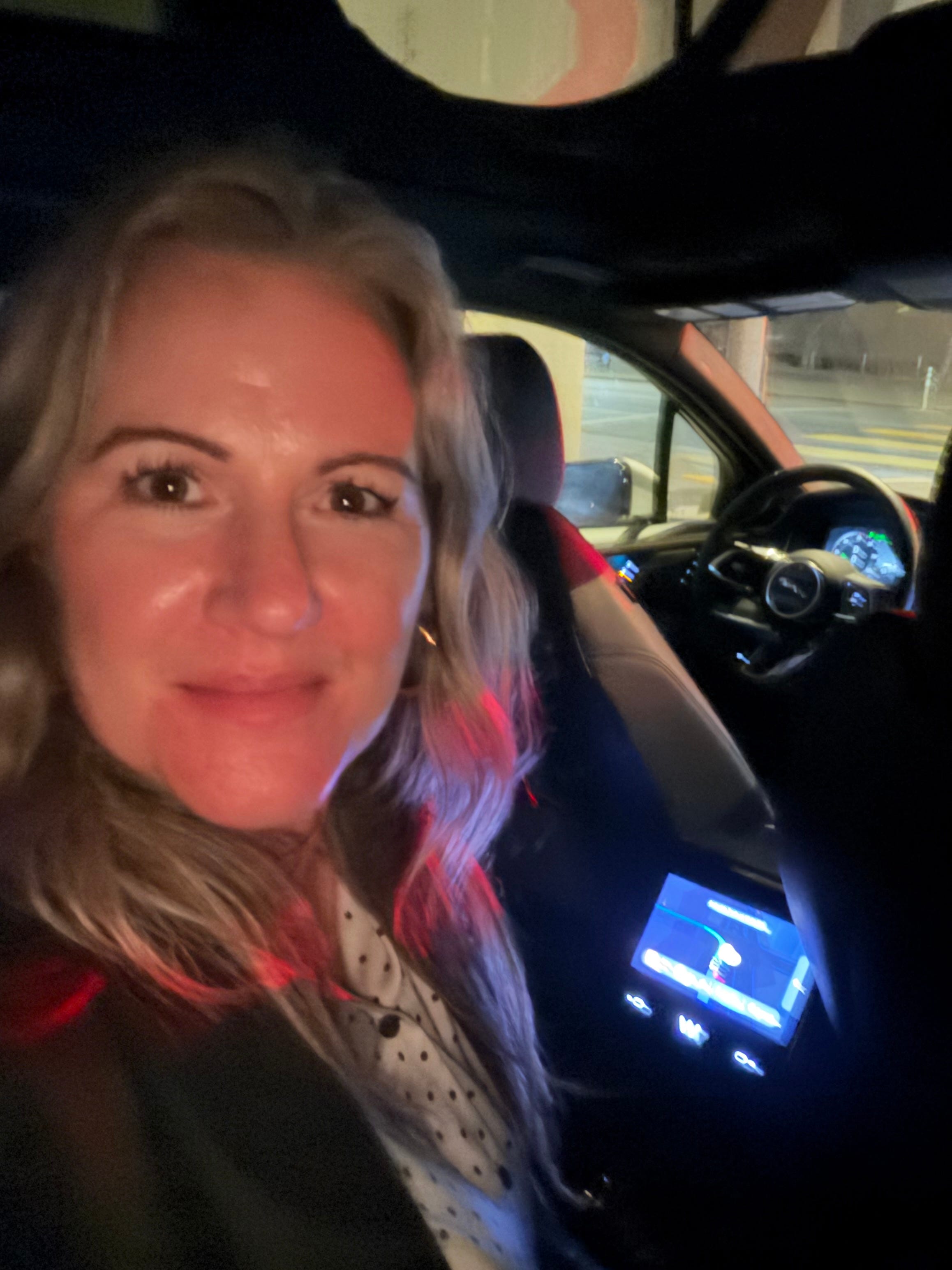
In case you haven’t ridden in one or seen one, here is what happens when a Waymo hits a roundabout and cannot fully resolve the decision tree. It keeps going. It goes around and around and around the same circle, doing the same thing, perfectly, every time. It’s just waiting for a signal that changes the calculus.
Einstein called doing the same thing over and over and expecting a different result: insanity.
That is what the AI rat race looks like from the outside. It’s perfectly executed circles. No one in the driver’s seat asking: is this still the right direction? Are all of our people still with us? Is this producing quality, or just producing?
Think about the redwood forests. The oldest coastal redwoods have survived two thousand years of fires, droughts, and storms. They don’t grow tall by growing faster than everything else. They grow tall by growing together. Their root systems extend outward for hundreds of feet, intertwining with every tree around them. When a storm hits, it is not the individual tree that holds. It is the network.
The interdependence is how they survive.
That is the model for AI transformation that actually works.

Be Curious.
There is a coach I keep coming back to: Ted Lasso. His philosophy is two words: be curious.
He doesn’t ask his team to be clever, nor optimized, but curious.
He takes a group of individuals from every corner of the world, every background, every language, and he coaches them not by making them all the same but by being curious enough to find out what each one brings.
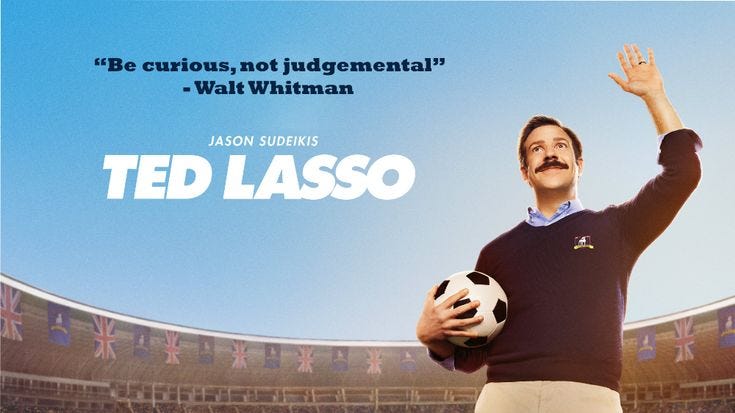
The best teams in the world are the most human teams, working interdependently. Not working despite their differences but because of them.
Human-centered leadership is not the soft strategy.
It is the winning strategy.
What You Can Do This Week
Three questions to take back to your organization. I call them the Speed Tax Diagnostic.
Q1: How are you measuring adoption beyond usage? Token counts and login rates are not adoption. What do people do differently because of the tool?
Q2: Where is the gap between where change is designed and where work happens? If learning occurs in programs but behavior reverts on the job, you have a transfer gap. That gap is your Speed Tax accumulating every single day.
Q3: Who designed your AI rollout, and did they start by listening? The people closest to the work know what will stick. If your rollout was designed without them, you are paying a Speed Tax you do not have to pay.
Want to Go Deeper?
I am building the full workshop version of this framework for HR and people strategy leaders. Here is what is available:
Free: The Speed Tax Diagnostic A one-page self-assessment for your organization. Comment “DIAGNOSTIC” and I will send it directly.
Upcoming: Slow Down to Win Workshop A half-day intensive for HR executives and people strategy teams. We work through the full Culture Architecture framework, run the diagnostic together, and build your 90-day action plan. Available for organizations and cohorts. Details at bravaglobaladvisory.com.
On the Podcast I am releasing a solo episode early this week to celebrate the 6th anniversary of the podcast. I’m walking through the full framework. “Slow Down to Win” on A World of Difference. Find it wherever you listen.
Speaking and Consulting If you are navigating an AI transformation and want a thought partner who brings the behavioral science and the organizational data into the room alongside the technology strategy, reach out on Linkedin or email me at lori@loriadamsbrown.com.
Lori Adams-Brown is a Strategic Transformation Executive and founder of Brava Global Advisory. She works at the intersection of executive decisions around AI adoption, using behavioral science, and human-centered organizational design. She has worked across six continents and lived on three. Her podcast, A World of Difference, has been downloaded over 153,000 times in more than 100 countries.
bravaglobaladvisory.com | A World of Difference Podcast | linkedin.com/in/loriadamsbrown